

Hey there, if you've ever shopped around for mounted bearings, you've probably noticed two main types tossed around: thermoplastic and thermoset. But don't worry, I'm here to break down the real difference-especially since we specialize in thermoplastic mounted bearings and want you to make the best pick for your project.
Let's start with the basics. Mounted bearings are those workhorses that sit on shafts to let things spin smoothly, whether that's in conveyor systems, food processing equipment, or even agricultural gear. The big distinction between thermoplastic and thermoset comes down to how they're made, and that changes everything about how they perform, last, and fit into your budget.
First up, thermoset bearings. These are made by heating a resin (like epoxy, phenolic, or vinyl ester) mixed with fillers, right? Once that resin cures-like, it goes through a chemical reaction and hardens permanently-you can't melt it down again. It's a one-and-done deal. Heat a thermoset bearing too much, and it'll crack or char, not reshape. I've seen a few customers grab these because they're cheap upfront, but they've got flaws. They're brittle, so if you drop a conveyor part or there's a sudden impact, they might snap instead of bending a little. Also, they hate moisture or chemicals-if your setup's near a pool of water or cleaning chemicals, that resin can break down over time.
Now our side: thermoplastic mounted bearings. These are made from resins like nylon, polyethylene, or polypropylene, and here's the key-they melt when heated and harden when cooled. No chemical reaction, just a physical change. That's why you might see us reference things like the Plastic Pillow Block Bearing on our site-those are exactly these thermoplastic ones. Let's talk perks. They're way more impact-resistant than thermoset. If a part on your line shifts and the bearing takes a hit, it'll flex a little instead of breaking. They're also corrosion-proof-no more rust issues, which is a huge win for food and beverage or marine setups where moisture's constant.
Wait, let's drill into how that manufacturing difference affects real use. Thermoset bearings are molded once, so if you need a custom shape or size, you're stuck paying for a whole new mold (and that's pricy). Thermoplastics? We can machine them or even injection mold them, and parts like the 1 Inch Plastic Pillow Block Bearing can be swapped out easier because they're consistent. Oh, and when you install them, little details matter. Thermoplastic parts are often lighter, so if you're dealing with weight-sensitive equipment, that's a big plus. But let's not skip small components-like the Lock Washer we offer for our thermoplastic bearings-they work perfectly because the bearing's slightly flexible, so the lock washer doesn't have to fight a super rigid surface.
Here's the part I wish more people knew: thermoset vs. thermoplastic isn't just about material-it's about maintenance long-term. Thermoset bearings don't take lubrication well, so you're usually stuck with grease that attracts dust and turns into a sticky mess over time. Our thermoplastic ones? They're self-lubricating a lot of the time. That means less upkeep, fewer shutdowns, and more time your equipment's running. I heard a story last month from a small bakery that switched from thermoset pillow blocks to ours-they cut their bearing maintenance time by 30% because they didn't have to re-grease every other week.

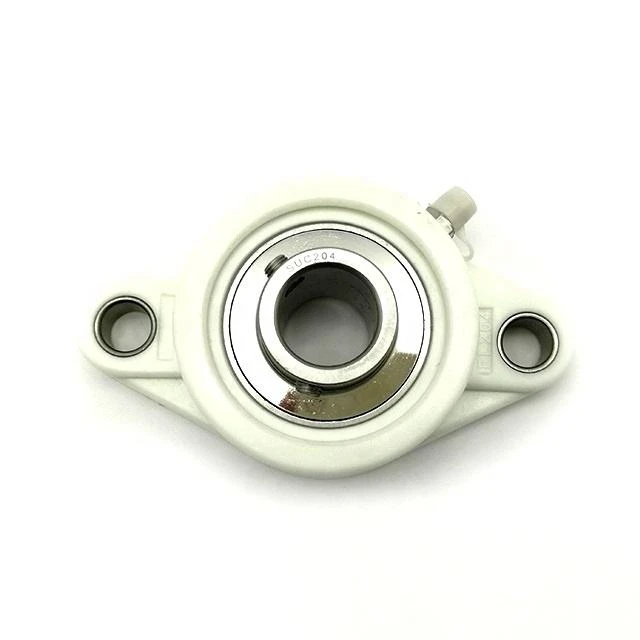
But let's be real-thermoplastics aren't perfect. If you're running a high-heat application, like near a metal melting operation, thermoplastic will soften (usually around 200-250°F, depending on the resin), while thermoset can handle up to 500°F. So we don't push our thermoplastic bearings on every project-we tell customers if their setup's too hot, thermoset might be better. But 9 times out of 10, for industrial, food, agricultural, or general conveyor use, thermoplastic is the way to go.
Another point: cost. Thermoset might seem cheaper at first, but replace it twice a year vs. our thermoplastic that lasts 3-5 years? The total cost adds up. Plus, our thermoplastic parts are easier to repair if you mess up the installation-if you drill a hole wrong, you can often fix it with a heat gun and reshape it, whereas a thermoset part, once drilled, is just a broken piece.
I get it, it's easy to just grab the cheapest option, but when it comes to mounted bearings, downtime costs way more than a slightly higher initial purchase. We've had customers come to us after blowing through two sets of thermoset bearings in a year and switch to ours-they saved money within 6 months.
If you're still unsure which fits your project, don't guess. We've got folks ready to walk you through it-whether you need a standard part like the 1-inch pillow block, or a custom thermoplastic bearing for your unique setup. We can help you weigh impact resistance, moisture exposure, heat levels, and maintenance needs to pick the right one.
Don't waste time with bearings that'll let you down. Reach out to our team today to chat about your needs and get a quote for thermoplastic mounted bearings that'll keep your operations smooth.
References:
- Modern Plastics Encyclopedia, McGraw-Hill, 2022.
- Mounted Bearing Technology for Industrial Applications, Industrial Press, 2021.
- Thermoplastic vs. Thermoset Materials: Performance Comparison, Society of Manufacturing Engineers, 2020.


