

Choosing the right bearing often starts with something very simple: checking its dimensions.
Whether you are replacing an existing bearing or selecting one for a new machine, three measurements usually come first - bore diameter (d), outer diameter (D), and width (B or T). If these dimensions do not match the shaft and housing, even a bearing with the correct part number or load rating will not be a proper replacement.
A Bearing Size Chart provides a convenient way to compare these dimensions, bearing numbers, load ratings, and speed limits in one place.
This guide explains how to read a bearing size chart, understand the most common bearing dimensions, compare Ball Bearings, Roller Bearings, and Thrust Bearings, and avoid common sizing mistakes when sourcing bearings from different manufacturers.
What Is a Bearing Size Chart?
A bearing size chart is a reference table that connects a bearing number with its main physical dimensions and performance data.
The basic dimensions normally include:
· d - Bore Diameter
· D - Outer Diameter
· B - Bearing Width
· T - Bearing Height or overall width for certain Thrust Bearings
Depending on the chart, you may also find:
· Dynamic Load Rating (C)
· Static Load Rating (C₀)
· Maximum RPM
Bearing type
· Dimension series
· Sealing or clearance suffixes
Bearing dimensions for many radial bearing designs follow standardized systems, including ISO 492, while tapered roller bearings are covered by ISO 355. This standardization makes it possible to compare equivalent bearing sizes across different brands.
However, standardized dimensions do not mean that every performance specification is identical. Two bearings with the same dimensions can have different load ratings, materials, internal designs, lubrication, seals, or speed ratings.
That distinction is important when purchasing replacement bearings.
The Three Bearing Dimensions You Should Check First
When identifying a bearing, start with the three dimensions that determine whether it will physically fit.
1. Bore Diameter - d
The bore diameter is the diameter of the hole through the Inner Ring.
It must match the shaft diameter and the required shaft fit.
For example, a 6205 has a 25 mm bore. If the shaft is designed for a 25 mm bearing seat, the bore dimension is the first specification to confirm.
2. Outer Diameter - D
The Outer Diameter is the diameter across the outside of the Outer Ring.
This dimension needs to match the housing bore.
A bearing with the correct bore but an incorrect OD will not fit the housing correctly.
3. Width - B or T
For most radial bearings, B represents the bearing width.
For many Thrust Bearings, the corresponding dimension may be shown as T or another height dimension depending on the bearing design.
Width becomes particularly important when installation space is limited.
A bearing may have the correct bore and OD but still fail to fit because the available axial space is insufficient.
Quick Reference
| Symbol | Dimension | What It Must Match |
|---|---|---|
| d | Bore Diameter | Shaft |
| D | Outer Diameter | Housing |
| B | Width | Available axial space |
| T | Thrust bearing height | Available mounting space |
These three dimensions should be checked before comparing load ratings or other specifications.
Why Bearing Dimensions Matter Beyond Physical Fit
Bearing dimensions do more than determine whether a bearing can be installed.
They also influence the bearing's load capacity, speed capability, and compatibility with existing equipment.
Bearing Size and Load Capacity
A larger bearing cross-section generally provides more room for Rolling Elements and can support higher loads.
For example, the original reference data lists a 6308 with a 40 mm bore and a dynamic load rating of 40.5 kN, while a 6204 with a 20 mm bore has a dynamic load rating of 12.8 kN. These examples show why bearing series and cross-section matter when selecting a bearing for higher loads.
Still, bore size by itself should not be used to predict load capacity. Bearing series, internal geometry, number and size of Rolling Elements, material, and manufacturer design all affect the final rating.
Bearing Size and Speed
Speed capability also changes with bearing size.
Larger bearings generally require more attention to heat generation, lubrication, and operating conditions at high RPM.
For example, the reference chart lists a grease-lubricated 6200 at up to 22,000 RPM, while the larger 6210 is listed at 7,000 RPM.
The exact speed limit must always be checked for the specific bearing configuration.
Cross-Brand Replacement
When replacing an SKF bearing with an NTN, NSK, FAG, Timken, or another manufacturer's bearing, the part number alone should not be the only check.
Verify:
d × D × B
A bearing may appear to be an equivalent replacement while having a different internal design, load rating, seal configuration, or speed rating.
How to Read a Bearing Size Chart
Most bearing dimension tables use a similar structure.
| Column | Meaning |
|---|---|
| Bearing No. | Identifies bearing type, series, and bore |
| d (mm) | Bore Diameter |
| D (mm) | Outer Diameter |
| B (mm) | Width for radial bearings |
| T (mm) | Height or width for certain Thrust Bearings |
| C (kN) | Dynamic Load Rating |
| C₀ (kN) | Static Load Rating |
| Max RPM | Limiting speed under specified lubrication |
The C value is mainly used when evaluating rotating loads and bearing life.
The C₀ value becomes especially important when evaluating static loads, shock loads, or slow oscillating conditions.
Maximum RPM should also be treated as a bearing-specific value rather than a universal number for an entire series.
Ball Bearing Size Chart
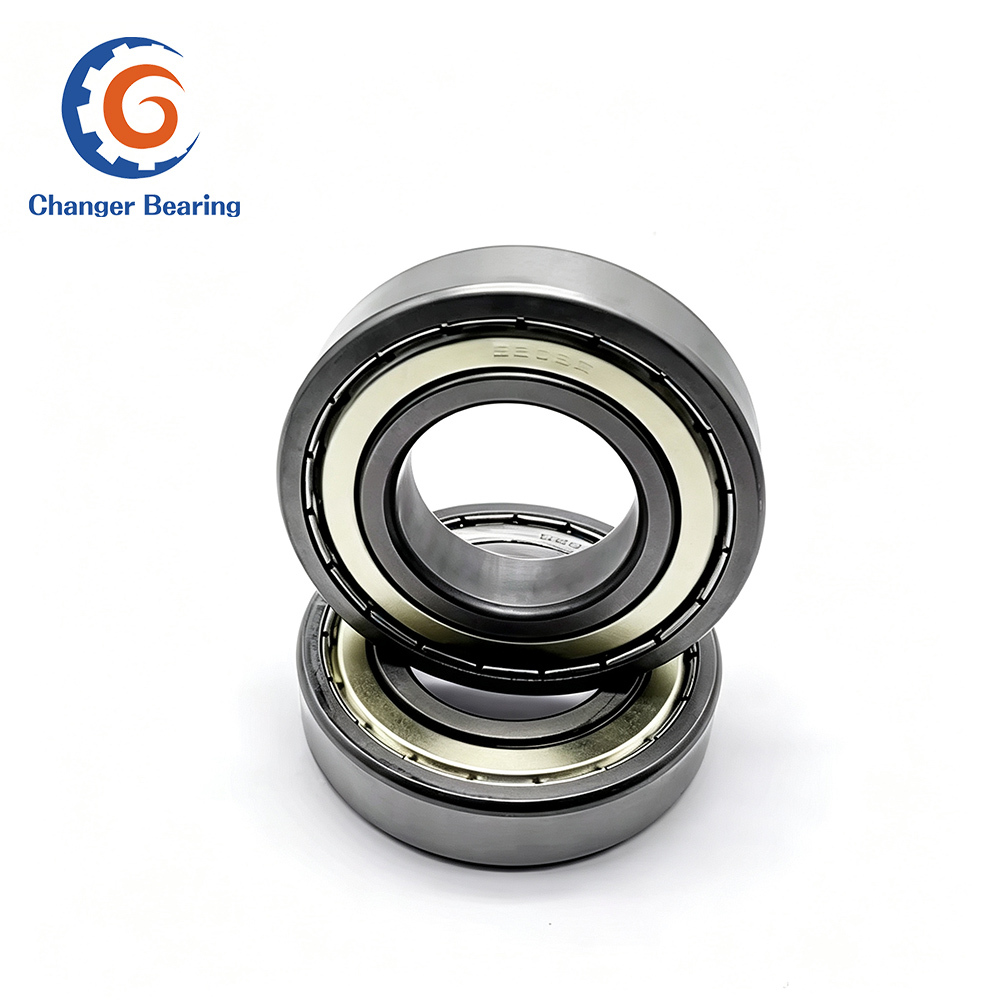
Deep Groove Ball Bearings are among the most widely used bearing types.
They primarily support Radial Load and can also accommodate moderate Axial Load in both directions.
The 6200 and 6300 series are common examples.
6200 Series - ISO Dimension Series 02
| Bearing No. | d (mm) | D (mm) | B (mm) | C (kN) | C₀ (kN) | Max RPM |
|---|---|---|---|---|---|---|
| 6200 | 10 | 30 | 9 | 5.10 | 2.36 | 22,000 |
| 6201 | 12 | 32 | 10 | 6.82 | 3.10 | 20,000 |
| 6202 | 15 | 35 | 11 | 7.65 | 3.72 | 18,000 |
| 6203 | 17 | 40 | 12 | 9.56 | 4.75 | 17,000 |
| 6204 | 20 | 47 | 14 | 12.80 | 6.55 | 15,000 |
| 6205 | 25 | 52 | 15 | 14.80 | 7.80 | 13,000 |
| 6206 | 30 | 62 | 16 | 19.50 | 11.20 | 11,000 |
| 6207 | 35 | 72 | 17 | 25.70 | 15.30 | 9,500 |
| 6208 | 40 | 80 | 18 | 29.10 | 17.80 | 8,500 |
| 6209 | 45 | 85 | 19 | 32.50 | 21.20 | 7,800 |
| 6210 | 50 | 90 | 20 | 35.10 | 23.20 | 7,000 |
6300 Series - ISO Dimension Series 03
The 6300 series uses many of the same bore sizes as the 6200 series but has a larger cross-section.
That means a 6300-series bearing generally has a larger OD and greater load capacity for the same shaft diameter.
| Bearing No. | d (mm) | D (mm) | B (mm) | C (kN) | C₀ (kN) | Max RPM |
|---|---|---|---|---|---|---|
| 6300 | 10 | 35 | 11 | 8.06 | 3.72 | 20,000 |
| 6301 | 12 | 37 | 12 | 9.72 | 4.55 | 19,000 |
| 6302 | 15 | 42 | 13 | 11.40 | 5.40 | 17,000 |
| 6303 | 17 | 47 | 14 | 13.50 | 6.55 | 16,000 |
| 6304 | 20 | 52 | 15 | 15.90 | 7.80 | 14,000 |
| 6305 | 25 | 62 | 17 | 22.50 | 11.40 | 12,000 |
| 6306 | 30 | 72 | 19 | 28.00 | 15.00 | 10,000 |
| 6307 | 35 | 80 | 21 | 33.50 | 19.20 | 8,800 |
| 6308 | 40 | 90 | 23 | 40.50 | 24.00 | 7,800 |
| 6309 | 45 | 100 | 25 | 52.70 | 32.00 | 7,000 |
| 6310 | 50 | 110 | 27 | 62.00 | 38.00 | 6,400 |
6200 vs. 6300 Series
A useful example is the 6205 and 6305.
Both bearings have a 25 mm bore, so they can be used with the same nominal shaft diameter.
But their outside dimensions are different:
· 6205: 25 × 52 × 15 mm
· 6305: 25 × 62 × 17 mm
The 6305 offers a higher dynamic load rating, but the housing must provide enough space for its larger 62 mm OD.
So moving from one series to another is not simply a matter of choosing a bearing with the same bore.
Roller Bearing Size Chart
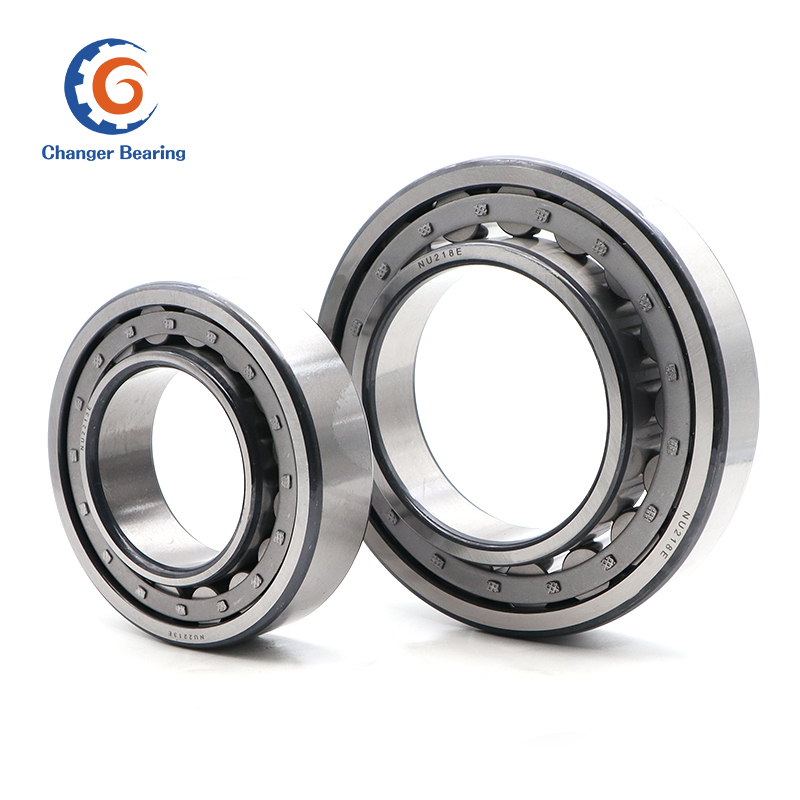
Cylindrical Roller Bearings are often selected when radial load capacity is more important than the very low friction associated with many Ball Bearings.
Because the rollers contact the Raceway over a line rather than a point, Cylindrical Roller Bearings can support relatively high Radial Load for a given bore size.
NU200 Series - Cylindrical Roller Bearings
| Bearing No. | d (mm) | D (mm) | B (mm) | C (kN) | C₀ (kN) | Max RPM |
|---|---|---|---|---|---|---|
| NU204 | 20 | 47 | 14 | 25.50 | 17.00 | 12,000 |
| NU205 | 25 | 52 | 15 | 27.00 | 18.30 | 11,000 |
| NU206 | 30 | 62 | 16 | 36.00 | 25.00 | 9,500 |
| NU207 | 35 | 72 | 17 | 48.00 | 34.00 | 8,000 |
| NU208 | 40 | 80 | 18 | 56.00 | 40.00 | 7,000 |
| NU209 | 45 | 85 | 19 | 60.00 | 44.00 | 6,300 |
| NU210 | 50 | 90 | 20 | 64.00 | 49.00 | 6,000 |
| NU211 | 55 | 100 | 21 | 83.00 | 63.00 | 5,300 |
| NU212 | 60 | 110 | 22 | 96.00 | 75.00 | 5,000 |
One important point is that many NU-series Cylindrical Roller Bearings have limited or no axial locating capability.
If the machine produces significant combined Radial Load and Axial Load, an Angular Contact Ball Bearing, Spherical Roller Bearing, or another suitable bearing arrangement may be required.
Thrust Bearing Size Chart
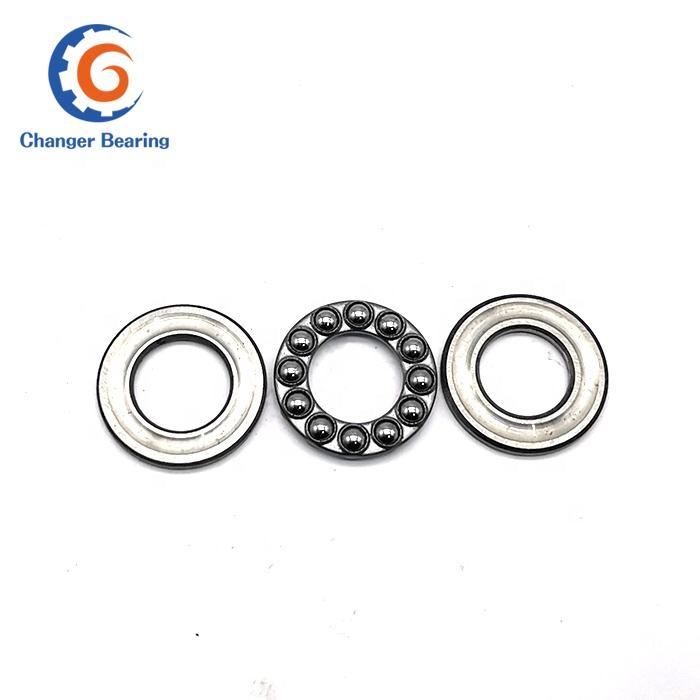
Unlike Radial Bearings, Thrust Bearings are primarily designed to carry forces acting parallel to the shaft.
They can be found in applications such as:
· Vertical pump shafts
· Machine tools
· Automotive systems
· Steering mechanisms
· Jacking equipment
· Other axial-load applications
51100 Series - Single Direction Thrust Ball Bearings
| Bearing No. | d (mm) | D (mm) | T (mm) | C (kN) | C₀ (kN) |
|---|---|---|---|---|---|
| 51100 | 10 | 24 | 9 | 7.65 | 17.00 |
| 51101 | 12 | 26 | 9 | 8.00 | 18.00 |
| 51102 | 15 | 28 | 9 | 8.00 | 18.30 |
| 51104 | 20 | 35 | 10 | 15.10 | 29.00 |
| 51105 | 25 | 42 | 11 | 18.00 | 36.00 |
| 51106 | 30 | 47 | 11 | 18.30 | 38.00 |
| 51107 | 35 | 52 | 12 | 20.40 | 42.50 |
| 51108 | 40 | 60 | 13 | 27.00 | 58.50 |
| 51110 | 50 | 70 | 14 | 29.00 | 67.00 |
| 51112 | 60 | 85 | 17 | 42.50 | 100.00 |
A Common Thrust Bearing Mistake
A Single Direction Thrust Ball Bearing such as the 51100 series is designed for axial loading. It should not be treated as a general-purpose radial bearing.
If the application involves significant combined radial and axial loads, the bearing arrangement needs to be reconsidered rather than simply increasing the size of the Thrust Bearing.
For this type of application, Angular Contact Ball Bearings or other combined-load bearing designs may be more appropriate.
Metric vs. Inch Bearing Sizes
Bearing dimensions are not always expressed in millimeters.
Metric Bearings are widely used in modern industrial equipment around the world, while Inch Bearings remain common in North American agricultural machinery, older equipment, and certain legacy designs.
| Feature | Metric Bearings | Inch Bearings |
|---|---|---|
| Standards | ISO / DIN | ABMA / AFBMA |
| Bore | Millimeters | Fractions of an inch |
| Common series | 6200, 6300, NU, 51100 | R series, 1600 series |
| Main markets | Global | North America and legacy equipment |
| Example | 6205 - 25 mm bore | R10 - 5/8 in bore |
When replacing an Inch Bearing with a Metric Bearing, or the other way around, do not rely on a similar-looking bore size.
Check the bore, OD, and width together.
Even a small difference in the Outer Diameter can affect the housing fit and cause problems during operation.
How to Decode a Bearing Number
Bearing part numbers contain useful information, although the exact numbering system depends on the bearing type and manufacturer.
For many 6×00-series Deep Groove Ball Bearings, the basic structure can be understood as follows.
| Position | Meaning | Example: 6207-2RS/C3 |
|---|---|---|
| First digit | Bearing type | 6 = Deep Groove Ball Bearing |
| Second digit | Dimension series | 2 = Series 02 |
| Last two digits | Bore code | 07 × 5 = 35 mm |
| Suffix | Sealing type | 2RS = Double Rubber Seal |
| Clearance suffix | Internal Clearance | C3 = Greater than standard |
Some common type codes include:
| Code | Bearing Type |
|---|---|
| 6 | Deep Groove Ball Bearing |
| 7 | Angular Contact Ball Bearing |
| NU / NJ / N | Cylindrical Roller Bearing |
| 22 / 23 | Spherical Roller Bearing |
| 32 / 33 | Tapered Roller Bearing |
| 51 / 52 | Thrust Ball Bearing |
Keep in mind that suffix conventions can vary between bearing types and manufacturers.
If the bearing number is damaged or difficult to read, measuring the bearing is safer than relying entirely on the remaining markings.
What to Do When the Bearing Number Is Unclear
Old bearings are often dirty, worn, or damaged. In some cases, the stamped part number may no longer be readable.
Instead of guessing, measure the bearing.
Use a caliper to check:
· Bore Diameter
· Outer Diameter
· Width
Then compare those measurements with the relevant Bearing Size Chart.
This is particularly important when ordering replacement bearings for equipment that has been running for many years.
A wrong number can result in a bearing that looks similar but does not have the correct dimensions.
Common Bearing Sizing Problems
Ordering Only by Bearing Number
Part numbers can be misread, especially when the bearing has been exposed to dirt, corrosion, or wear.
If the marking appears to be "6205" but the actual bearing measures differently, do not place the order based only on the stamped number.
Measure the bearing.
Replacing an Open Bearing With a Sealed Bearing
A sealed bearing may have different dimensions from its open counterpart depending on the design.
The 2RS, ZZ, and open configurations should therefore be checked individually.
Do not assume that adding a seal will leave every dimension unchanged.
Assuming Equivalent Dimensions Mean Equivalent Performance
Two bearings can share the same d × D × B dimensions but still have different:
· Dynamic Load Rating
· Static Load Rating
· Maximum RPM
· Internal Clearance
· Seal design
· Cage design
· Lubrication
· Manufacturing precision
This is particularly important when replacing a branded bearing with a lower-cost alternative.
What a Bearing Size Chart Can Tell You About a Failure
A Bearing Size Chart is not only useful when buying a bearing. It can also help identify whether the replacement bearing was the correct size.
Bearing Gets Hot Soon After Replacement
Start by checking the dimensions and fit.
If the wrong bearing series was installed, the Outer Diameter may not match the housing correctly.
For example, the 6205 and 6305 both have a 25 mm bore, but their ODs are 52 mm and 62 mm respectively.
Installing the wrong series can result in an incorrect housing fit and premature damage.
Noise Appears After Changing the Bearing
If the dimensions are correct, look at the bearing configuration.
A change from 2RS to ZZ, for example, changes the sealing arrangement. The new bearing may therefore have different protection against contamination and different friction or speed characteristics.
Thrust Bearing Fails in a Reversing Application
If a single-direction Thrust Ball Bearing is used where axial force reverses direction, the bearing arrangement may be inappropriate.
The bearing type needs to match the direction and magnitude of the actual load.
How to Select the Correct Bearing Size
A practical bearing selection process can be kept fairly simple.
Step 1 - Measure the Shaft
Start with the shaft diameter.
This gives you the required Bore Diameter (d).
Step 2 - Check the Housing
Measure the actual housing bore rather than assuming that the old bearing's OD is correct.
Housing seats can wear over time.
Step 3 - Check Available Width
Make sure the bearing width is compatible with the available mounting space.
Step 4 - Identify the Load Direction
Ask whether the machine mainly produces:
· Radial Load
· Axial Load
· Combined Radial and Axial Load
This helps determine whether you need a Ball Bearing, Roller Bearing, Thrust Bearing, or another bearing design.
Step 5 - Check Load Ratings
Compare the required operating load with the Dynamic Load Rating (C) and Static Load Rating (C₀).
Do not select a bearing based on dimensions alone.
Step 6 - Check Speed
Make sure the actual operating RPM remains within the appropriate speed limit for the exact bearing configuration.
Seals, lubrication, cage design, temperature, and load can all influence speed capability.
Step 7 - Verify the Complete Part Number
Finally, confirm the complete bearing number, including suffixes such as:
· 2RS
· ZZ
· C3
Other manufacturer-specific designations
The suffix may change the bearing's sealing, clearance, lubrication, or other characteristics.
Bearing Size Chart: Quick Selection Checklist
Before placing an order, check these points:
✓ Shaft diameter - Does the bore match?
✓ Housing diameter - Does the Outer Diameter fit?
✓ Available width - Is there enough installation space?
✓ Bearing type - Does the bearing support the required load direction?
✓ Dynamic Load Rating - Is C sufficient for the rotating load?
✓ Static Load Rating - Is C₀ suitable for stationary or shock conditions?
✓ Speed - Is the operating RPM within the specified limit?
✓ Seal or shield - Is the bearing suitable for the working environment?
✓ Internal Clearance - Does the selected clearance match the application?
✓ Manufacturer data - Have you checked the current technical datasheet?
This last step is important because catalog values can vary between manufacturers even when the basic bearing dimensions are standardized.
FAQ
How do I find the correct bearing size?
Measure the Bore Diameter, Outer Diameter, and Width, then compare those measurements with the appropriate Bearing Size Chart.
If the original bearing number is readable, use it as a starting point, but verify the physical dimensions before ordering.
What are the three main bearing dimensions?
For most radial bearings, they are:
· Bore Diameter (d)
· Outer Diameter (D)
· Width (B)
For Thrust Bearings, the corresponding height or width may be represented by T depending on the design.
Can I replace a 6205 with a 6305?
Not as a direct dimensional replacement.
Both have a 25 mm bore, but the 6205 is 25 × 52 × 15 mm, while the 6305 is 25 × 62 × 17 mm.
The 6305 requires a larger housing bore.
Does the same bearing number have the same dimensions across brands?
For standardized bearing designs, equivalent part numbers generally follow the same basic dimensional standards.
However, load ratings, speed limits, internal construction, seals, clearance, and other specifications can differ.
Always compare the manufacturer's current datasheet before making a technical substitution.
What does C mean on a bearing size chart?
C is the Dynamic Load Rating.
It is used when evaluating bearing performance under rotating load and calculating bearing life.
What does C₀ mean?
C₀ is the Static Load Rating.
It is important when the bearing is stationary, rotates very slowly, oscillates, or experiences shock or high static loading.
Are larger bearings always better?
No.
A larger bearing may provide higher load capacity, but it can also require more installation space and may have different speed, friction, and cost characteristics.
The bearing should be sized according to the actual application rather than simply choosing the largest available option.
Final Thoughts
A Bearing Size Chart is one of the most useful tools for identifying and selecting bearings, but it should not be treated as a simple list of part numbers.
Start with the physical dimensions:
d × D × B
Then check the bearing type, load ratings, operating speed, internal clearance, sealing configuration, and working environment.
For cross-brand replacement, matching dimensions is only the first step. The selected bearing also needs to provide the required performance under the actual operating conditions.
For engineering calculations, always verify Dynamic Load Rating, Static Load Rating, and Maximum RPM against the current technical data from the specific manufacturer. The figures shown in the tables above are based on the referenced SKF Rolling Bearings Catalogue and should not be treated as universal ratings for every brand.
In practical bearing sourcing, taking a few minutes to measure the Bore Diameter, Outer Diameter, and Width can prevent a much more expensive mistake later.


